Friday, July 1, 2016

Ingenious with Intention

         We’ve probably all heard the famous Isaac Newton’s, “for every action there is an equal and opposite reaction,” but I’m a firm believer that this law applies to much more than just motion and physics and can be philosophically applied to life altogether. Nearly every manufacturing process results in waste products, and more than just the typical carbon dioxide emissions that everyone seems to talk about. The ethanol fuel industry produces distillers grains, and corn oil as waste products alongside their CO2 emissions. Meanwhile, the sugar-beet industry produces a beet pulp, as well as a beet molasses as byproducts of its industry. These are all examples of “equal and opposite reactions,” because in order to get the fuel from the ethanol industry and the sugar extracted from the sugar-beets there will never been a 100% retention rate and thus waste is produced in the process. One of the most amazing things, in my opinion, about the production of livestock is the distinctive ability to utilize waste products from other industries. All four of the waste products listed are used in animal diets, and without the livestock feeding industry utilizing these products what would we do with them, how would we dispose of them?

       The use of byproducts in livestock diets has steadily increased over the last ten years especially and has allowed for increased energy efficiencies, more cost effective food sources, and sustainable practices. Distillers grains byproducts off the ethanol industry can be utilized both dried as well as wet throughout the livestock sectors. The inclusion of these waste products is quite beneficial to the diet of the animal because it provides energy and protein. The nutrients within distillers grains are pretty readily available to the animal due to the prior processing the product has previously undergone which means they’re easily digestible and thus usable to the animal for growth and production. According to an ERS report, for every bushel of corn that is processed by an ethanol plant there's 2.8 gallons of fuel and nearly 17.5 pounds of animal feed. That is an incredible statistic to think about when you consider what we actually are attempting to produce is the fuel, and for every 56 pounds (the weight of a bushel), we only receive 2.8 gallons (approximately 23.35 pounds) of the product we are striving for and then 17.5 pounds of waste is produced, in which will ultimately need to be utilized by another industry or disposed of. That is a large amount of waste product which would possibly go unused without the livestock production industry’s intervention. When it comes to the sugar-beet industry, the molasses byproduct is a widely utilized waste. The byproduct sugar-beet molasses provides a high energy product and aids in dust control and overall palatability as well. Nearly 4-5% of the weight of every beet is produced as beet molasses waste, making a large amount of this byproduct when processed in surplus.
            One thing the world cannot claim the livestock feeding industry lacks is the flair to be resourceful. Producers have configured a way in which to use waste from other industries efficiently within their own production, which is truly remarkable. The ability to include and understand the benefits of these products adds to the sustainability of livestock production. There will always be fuel production and I don’t see the production of sugar tanking in the near future, so the waste from this industries allows for increased efficiencies across the various industries and for a relationship in which all involved benefit.
 
 
Sources:

Wednesday, June 8, 2016

A Rhyme Behind the Reason

          A common misconception surrounding agriculture today that is fed to the general public is that farmers and producers are only concerned with quantity not quality. While we do live in a world where “more” is better, there still exists a fundamental significance when it comes to quality. The story of what we do in agriculture is often told, but how we do it and how well we do it is often untold and overlooked. As a whole we strive for quality in all aspects, quality of life for the animals involved, quality of employment for employees and producers involved in the system of food production, and quality of product for the consumer. When it all boils down, there are essentially three fundamentals of what livestock producers and those in agriculture do in order to provide both a quality product and in the most quantity feasible to stock your local grocery store’s shelves. There must be care for the animals in terms of health and well-being, feeding of the animals, and lastly harvesting of the animals.  The first fundamental principle is that of caring for the animal, foremost concern is for their health and needs, in all aspects in order to provide the best quality of life possible. Things happen that are out of your control and sometimes animals get sick or injured, so yes that involves the use of medications and antibiotics in order to nurse the animals back to health, but contrary to popular belief, animals aren’t unnecessarily given antibiotics. Antibiotics are saved for genuine health related concerns, i.e. pink eye, pneumonia, scours, etc. I mean we all know antibiotics aren’t cheap, so the use of them without rhyme or reason seems a little trivial and like a waste of money. Just as any other business, livestock producers don’t go out of their way to raise their costs pointlessly, they’re still in the business of making money at the end of the day. The second fundamental principle in simplistic terms is feeding the animals. Nutrition is one of the biggest variables in livestock production, an animal’s nutrient requirements are always changing in accordance to their stage of production and thus their diets must be continually adjusted in order to meet their plane of nutrition. Feeding the animals appropriately is critical because all other realms of production will halt if nutritional requirements are not met, hence why we feed animals to the best of our ability, for their well-being as well as in order to promote optimum growth, and usability for human consumption. The final overlying principle of what must be done in animal agriculture and production is the harvesting of the animals. A quality harvest involves limited stress on the animal and pain-free. It is critical to the quality of the end product that everything goes as planned and is absolutely sound when it comes to harvest practices.

                There are many programs available and utilized across the nation that ensure quality production from start to finish and are even species specific; including but not limited to, Beef  
Quality Assurance (BQA), Pork Quality Assurance (PQA), National Dairy FARM program, Safe Feeds Safe Food, and the Human Slaughter Act. A lack of knowledge and understanding of the programs as well as their popularity among producers creates a wall in communication between producers and consumers and deleteriously affects consumer perception. According to Beef Magazine’s Gayle Smith, “With less than 2% of the population directly involved in production agriculture, and less than 1% making a full-time living in the business, 94% of consumers have zero connection to the agricultural industry...” That’s a huge communication gap to fill and I truly believe that has to start with a mutual understanding for what we do and how we do it in order to provide reason and a picture behind everything agriculture encompasses.   

For More Information on these programs as well as others, visit: http://www.animalagalliance.org/educate/
 

Sources:
http://beefmagazine.com/beef-quality/why-bqa-needs-be-mandatory-beef-industry-program?page=2

Friday, June 3, 2016

Power in the Process


          The Food and Agricultural Organization of the United Nations projects that in order to feed the human population in 2050, a mere 34 years away, our world food production will need to increase by 70%. A sensible solution to the anticipated food shortage is through the use of available modern technologies. One of the biggest controversies surrounding modern agriculture today is whether or not it is “sustainable” for years and generations to come. One of my favorite quotes comes from The National Cattlemen’s Beef Association’s executive director of global sustainability, Kim Stackhouse-Lawson, she states that “sustainability is a word that is often hijacked, it doesn’t mean totally organic. It’s about doing more with less and making continuous improvement…”  While I do believe that there is a place in the market for organic and naturally raised products and that they’re very important to offer to consumers, I want them to know that organic and naturally raised products are no safer nor are they more sustainable than conventionally raised products.
The degradation and harm to the soil from tilling, pesticides and intensification from
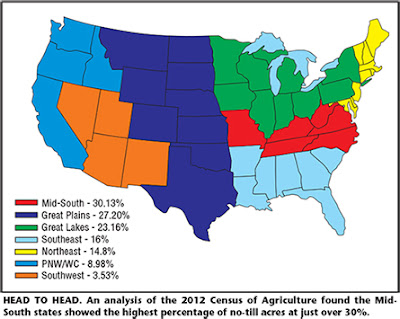
year to year has been brought to light within recent years. There are several solutions in order to combat the deleterious effects on soil integrity in which are growing in popularity. No-till farming and the use of cover crops has been increasingly popular and proven to be beneficial to the land when implemented properly over time. No-till farming is just as it sounds, it simply involves a lack of plowing, which allows the soil composition to remain intact and can actually lead to higher crop yields over time in comparison with conventionally raised tilled crops. Another popular movement is that of cover crops. Cover cropping involves growing an alternative harvest in between the growing season of the major crop produced on the land. Examples of popular cover crops include kale, rape, and wheat, these cover crops suppresses soil diseases and pests as well as weeds, promote active organic matter to the soil and improve soil stability. The sustainable nature of livestock production has been debated along with crop production sustainability, and as a result, the growth of all-naturally raised, grass-fed, and organic has been highly sought after by consumers. One thing many don’t consider is the time disadvantage it takes to produce niche market livestock, and thus an overall loss in efficiency. For example, the average age at harvest of a conventionally raised beef steer is around 16 months of age versus an average age of 21+ months of age for a grass-fed beef steer. The several months of difference between the two differing production systems is critical in terms of efficiency and all that surrounds it. The longer livestock take to reach market weights, the more cost you have into production with the same amount of product in the end, which in theory results in more carbon footprint per animal as well as not maximizing your potentials or in Kim Stackhouse-Lawson’s words, lacking to do more with less and thus not making continuous improvements.
All in all, the argument that modern agriculture lacks in sustainability is too casually thrown around without consideration to the bold changes that are happening every day in order to better the food production system. In order to account for the exponentially growing human population, we need modern production practices to be understood and accepted by consumers. Food production has the ability to reach the gigantic leap necessary to feed the world in 2050, but it will require the use of more modern agriculture and less niche markets due to the lag in niche market production in comparison with conventionally raised products.
      

Sources:

 https://www.populationinstitute.org/resources/populationonline/issue/1/8/
http://www.agweb.com/article/wanted-sustainable-beef-suppliers-naa-greg-henderson/
http://covercrops.cals.cornell.edu/soil-health.php
 https://www.no-tillfarmer.com/articles/489-no-till-movement-in-us-continues-to-grow


Friday, May 27, 2016

Farm To Table Affair


The process of getting food from farm to table has grown in concern substantially over the last ten years. Increasing consumer distress over the quality, safety and overall animal well-being in which their food originates from has continued to fill the newspapers, magazines, headlines, and good ‘ol social media taglines. It is nearly impossible to log onto your Facebook today and scroll through your newsfeed without coming across some video, article, or picture suggesting that livestock producers and farmers today “shouldn’t be trusted.” The distrust in food production presently is unlike anything we have ever seen before in the United States… or is it?

Upton Sinclair’s 1905 book, “The Jungle” acted as the vehicle that put motion into getting consumers to think about where their food comes from, how it is processed and raised, as well as the safety of the overall product. The book created an uproar and filled headlines of newspapers, consumed radio broadcast conversations, and soon led to an overall policy change a mere year later. The Federal Meat Inspection Act of 1906 became a law much credited to the heightened awareness surrounding food safety and sanitary conditions throughout harvest facilities within the United States. ”The Jungle” in a lot of ways can be compared to that of social media today. Social media has driven a heightened concern for consumers, driving them to ask and seek to understand the “who, what, when, where, why, and how” of their food’s production. We have all seen the gruesome and disheartening animal activists videos in which expose and depict the mistreatment of animals, inadequate housing conditions, etc. Social media is a powerful tool and has proven to be highly influential when it comes to getting people to think, but the sad thing about social media is that those viral videos that swarm our newsfeeds don’t tell the whole story. There are always going to be things that go wrong in any sort of system and there is no excuse for mistreatment of animals or inadequate quality of life, but the world never wants to read about what we in the agricultural community do right. Do you ever read about the livestock producer that was up at three in the morning pulling a calf because the first calf heifer couldn’t do it alone and without his assistance the cow and calf would have died? No. The world is so obsessed with the things that occasionally go wrong and lacks to see the behind the scenes, everyday activities in which farmers and livestock producers alike do in order to care for the animals that will eventually end up on your table. Stay tuned for explanations, opinions, and some not so headlined stories from the perspective of a proud modern agriculture enthusiast.